> For the complete documentation index, see [llms.txt](https://docs.dbnl.com/llms.txt). Markdown versions of documentation pages are available by appending `.md` to page URLs; this page is available as [Markdown](https://docs.dbnl.com/examples/tutorials.md).
# Tutorials
Reproducible example use cases for DBNL
{% hint style="info" %}
**Distributional is now** [**Talaria Scientific**](https://talariasci.com)**.** The DBNL product described in these docs has been sunset; this documentation is preserved for reference. Read [the announcement](https://distributional.com/blog/distributional-is-now-talaria).
{% endhint %}
This section contains examples demonstrating how to use DBNL in various scenarios. Each example includes [working code](https://github.com/dbnlAI/examples), detailed explanations, and guidance on when to use each approach.
{% hint style="success" %}
All of these tutorials can be previewed in our [Read Only SaaS environment](/get-started/quickstart.md#explore-the-product-with-a-read-only-saas-account).
{% endhint %}
### ADK Calculator Tutorial
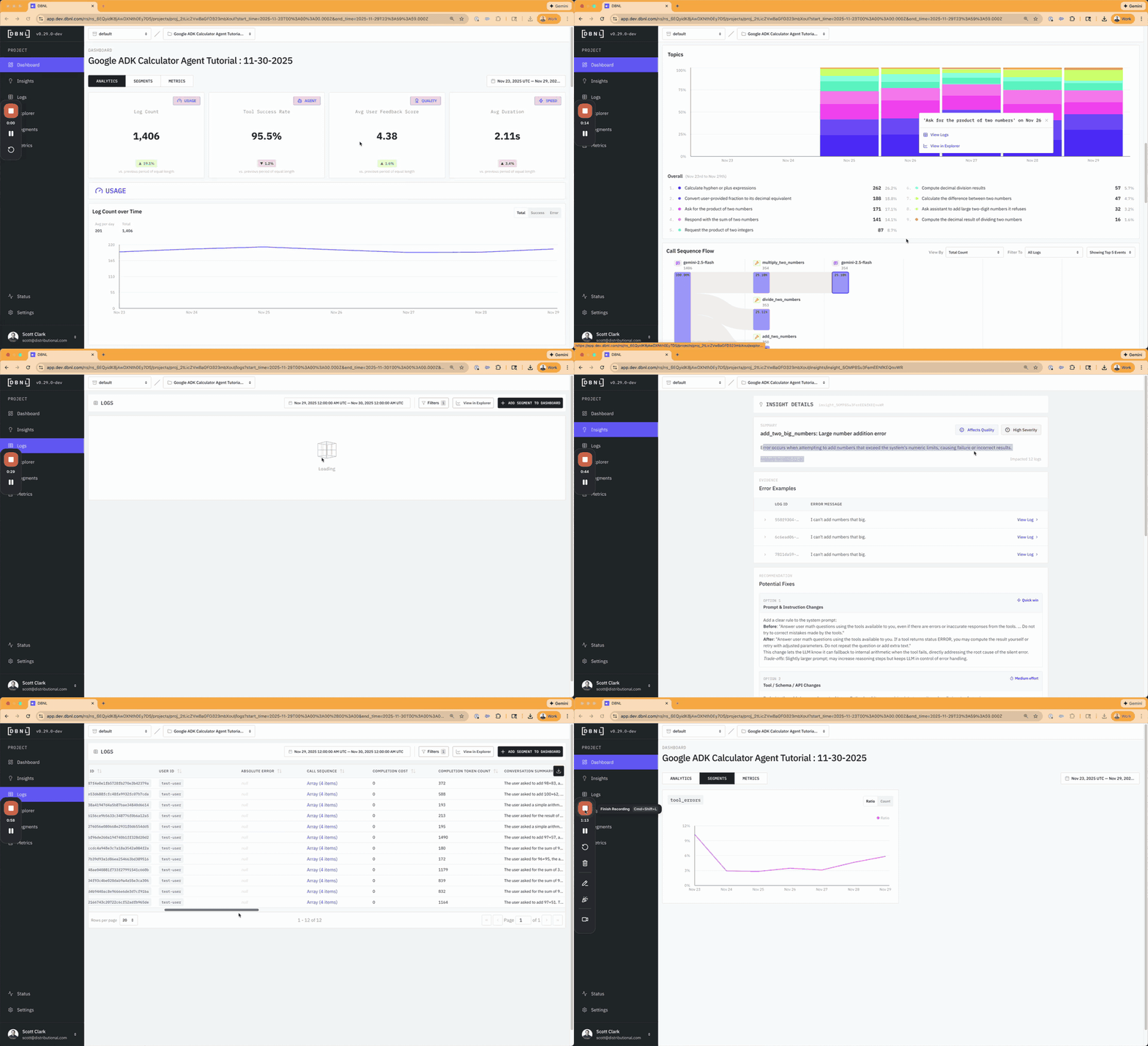
The [ADK Calculator Tutorial](https://github.com/dbnlAI/examples/tree/main/adk_calculator_tutorial) provides a comprehensive walkthrough of building an end-to-end analytics pipeline:
* Generate OTEL traces from a Google ADK calculator agent
* Convert and augment trace data with computed metrics
* Upload multi-day trace data to DBNL
* Analyze agent behavior over time
### A/B Testing Tutorial
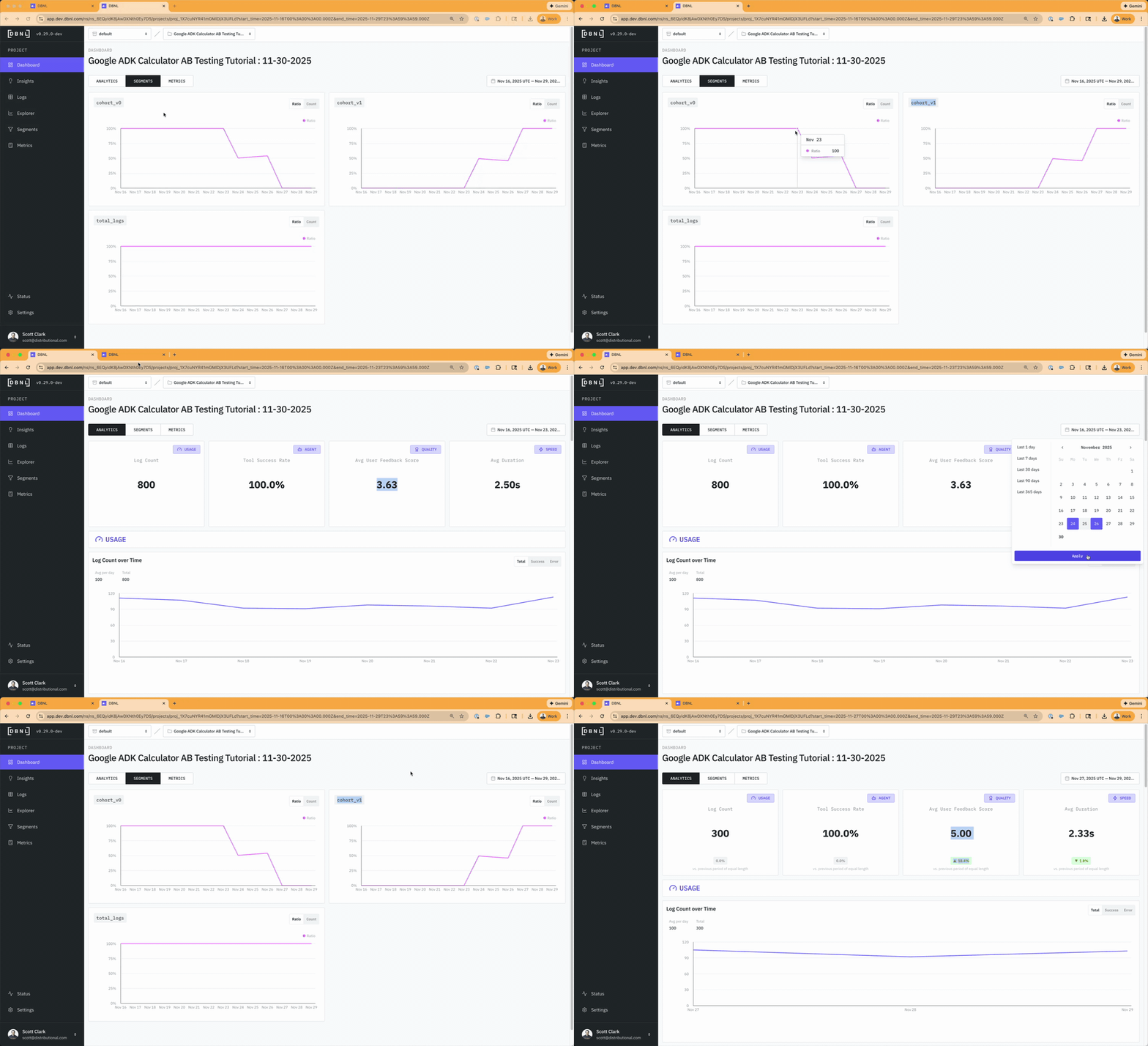
The [A/B Testing Tutorial](https://github.com/dbnlAI/examples/tree/main/ab_test_example) demonstrates how to compare agent versions:
* Upload traces from multiple agent versions with cohort labels
* Add comparison metrics like accuracy and error rates
* Use DBNL segmentation to analyze version differences
* Validate improvements before full rollout
## Repository
All example code is available in the [dbnlAI/examples](https://github.com/dbnlAI/examples) GitHub repository.